Two Technologies, One Goal:
Understanding Anti-Scald Valves in the Field

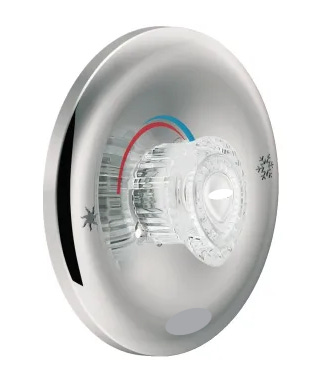
If you’re a home inspector, you’ve probably used the phrase “anti-scald valve” without always stopping to consider how it works—or how to describe it clearly to a client.
You’re not alone.
Even some definitions muddle the distinctions or focus too heavily on “flow restriction,” which is a minor feature, not the core function.
So let’s clear things up.
🔧 What is an Anti-Scald Valve?
“Anti-scald” is not a type of valve—it’s a purpose. A performance category.
There are two main types of valves that fulfill this purpose:
Pressure-Balancing Valves:
These respond to sudden changes in water pressure—like when someone flushes a toilet—by adjusting the ratio of hot and cold water to maintain consistent output temperature.Thermostatic Mixing Valves (TMVs):
These respond to changes in actual water temperature, mixing hot and cold with a thermostat-like element to maintain a user-set target temperature.
🚿 How Do We Test Them?
Regardless of design, the functional test is the same:
Turn the valve fully to hot and measure the water temperature at the outlet.
You're verifying that the valve limits the temperature—usually to 120°F or below—in accordance with safety expectations.
No need to identify the exact valve type in your report. Just verify its behavior.
🧠 Bonus Insight: Old vs. New
Modern valves are usually adjustable and reversible using simple tools.
Older units, however, often require specialized tools or manufacturer-specific instructions for adjustment.
This matters when inspectors recommend adjustment or replacement. Clients may assume any plumber can do it quickly—when in fact, an older model might demand more than they expect.
🛠️ The Inspector’s Role
You’re not diagnosing. You’re not enforcing code.
You’re simply observing and informing.
And when it comes to anti-scald protection, your job is to know:
What it looks like,
What it’s meant to do,
And how to speak about it responsibly.
Let me know how you describe these valves in your reports. Do you identify the type? Recommend temperature testing? Or simply note the presence or absence of scald protection?
Drop a comment—I’m listening.
“At the time of inspection, the tub/shower control exhibited functional anti-scald protection by limiting the maximum water temperature to approximately XX°F. No adjustment or repairs are recommended at this time.”
Good job!